Visible Quality
Why design helps people trust what they cannot yet see.
—
"Build it and they will come."
I've heard some version of this for years, usually from very smart people: engineers, founders, operators who care, rightly, about the thing itself: the product, the system, the hardware, the software. They're right to care. The thing has to work.
But I've spent enough time in rooms with ambitious technology companies to know that the thing itself is rarely fully visible. It's too complex, too early, or it lives inside a system only a handful of people actually understand. So people look for something else to judge instead: the founder's explanation, the demo, the deck, the dashboard, the way you're greeted at reception, the chair you're handed before the meeting starts.
No investor has ever walked out of a room saying the chair did it. But the chair was part of the evidence.
Here's the thing most people get wrong about this: it's not optional. You don't get to choose whether the chair is being read. You only get to choose whether you've thought about what it's saying. Steve Jobs understood this earlier and more completely than almost anyone in business. He famously insisted the circuit boards inside the original Macintosh be laid out cleanly, signed by the engineers who built them, even though no customer would ever open the case to see. He knew the discipline would show up somewhere else down the line, whether or not anyone could point to where. Most leaders have been slow to catch up with that idea. They still treat brand as the coat of paint you add once the real work is finished, rather than another place the real work is being judged.
The audience can't inspect the reliability of the hardware, or the maturity of the manufacturing process, or what's really going on inside the system. What they can inspect is the sentence used to explain it, the diagram meant to make it clear, the interface they're handed to try it themselves. None of this is superficial, whatever the engineers in the room think. Each touchpoint is doing more work than it looks like it's doing, quietly adding confidence or quietly removing it, and people rarely say this part out loud. They just become a little less certain, and they move on without knowing exactly why.
That's how people make decisions under uncertainty, and ambitious technology runs almost entirely on uncertainty. The company is asking for belief before the proof has fully arrived: invest before the market is obvious, join before the outcome is certain, trust a future that hasn't happened yet.
This is the bit people miss: brand and design stop being expression and become evidence.
I picked up the instinct for restraint in London, in design reviews where the cruellest thing anyone could say about a piece of work was that it was trying too hard. I picked up the instinct for ambition later, in rooms in California where nobody was trying to decorate a market. They were trying to move it, and decoration was beside the point. Most of what I think about brand now sits in the gap between those two rooms.
Ambition without restraint becomes theatre. Restraint without ambition becomes tastefully irrelevant. The work gets powerful when the ambition is large enough to matter and the signals are disciplined enough to be believed.
That's why visible quality matters, and why it's never really optional, only ever unmanaged.
If the website feels careless, people don't think "the website is careless." They think: what else is. A confused deck doesn't just read as a bad deck. It becomes a reason to wonder whether the strategy itself is confused. Nobody says this out loud in the meeting. The doubt just quietly takes a seat at the table.
This is where design and engineering tend to talk past each other, so it's worth being precise about what the job actually is. The point is not to make weak work look better than it is. Good design should never disguise weakness, inflate a claim, or act as a tasteful fog machine over unfinished thinking. There's already enough fog in business without adding more on purpose. The point is to make serious work easier to trust. That's a different job from making things prettier. It's translation. It's editing. It's knowing what to show, what to cut, and what standard you're not willing to let slip, even under deadline.
Taste gets mistaken for preference more often than it should. Preference is what I like. Taste is what the work needs. Knowing the difference is the actual job.
In frontier technology, that difference carries unusual weight. When the thing being built is new, complex, or not yet normal, every visible signal gets asked to do more work than it should have to. The smallest unresolved detail can quietly become a stand-in for a much bigger doubt. A clear diagram can make a complicated system feel graspable in a way the underlying engineering, on its own, never could. A precise sentence can close the distance between what you've built and what someone else can understand about it. None of this replaces proof. It just helps proof travel further than it would on its own.
You can build something extraordinary and still watch people fail to trust it, not because the work is weak, but because the quality is hidden, the story isn't clear, or the signals around it don't match the size of the ambition. Brand and design are the layer that sits between what you've actually built and whether anyone outside the building can tell. And people aren't deciding from perfect knowledge. They're deciding from whatever evidence happens to be in front of them. That's why they notice care, they notice when something's been resolved, and they notice, often faster than anyone would like, when it hasn't.
This is the part of the job that isn't really about style. It's editing and translating: knowing when something is too much, when it's beautiful but wrong, when a tiny detail is quietly carrying more weight than anyone in the meeting has clocked.
The work rarely looks dramatic from the outside. Sometimes it's removing a claim the company can't yet back up. Sometimes it's redrawing a diagram until the system stops looking like a system and starts looking like an idea. Sometimes it's rewriting one sentence until the room finally understands what the company has been trying to say for six months. And sometimes, yes, it's asking whether the chair is helping.
The companies that win this won't be the ones that make the most. They'll be the ones that know what to make, what to refine, what to stop making altogether, and which standard they refuse to let slip, whoever's watching. Taste only becomes powerful once it stops being one person's private instinct and starts being something the whole company holds itself to: in hiring, in product reviews, in the words on the website, in the room you walk a stranger into for the first time.
You don't get to decide whether you're being read at every one of those points. Jobs knew that before most of his peers did, which is most of why people still talk about the inside of a computer case nobody was ever meant to open. The only real decision left to you is whether you signed your own version of that circuit board, or just hoped nobody would look too closely.
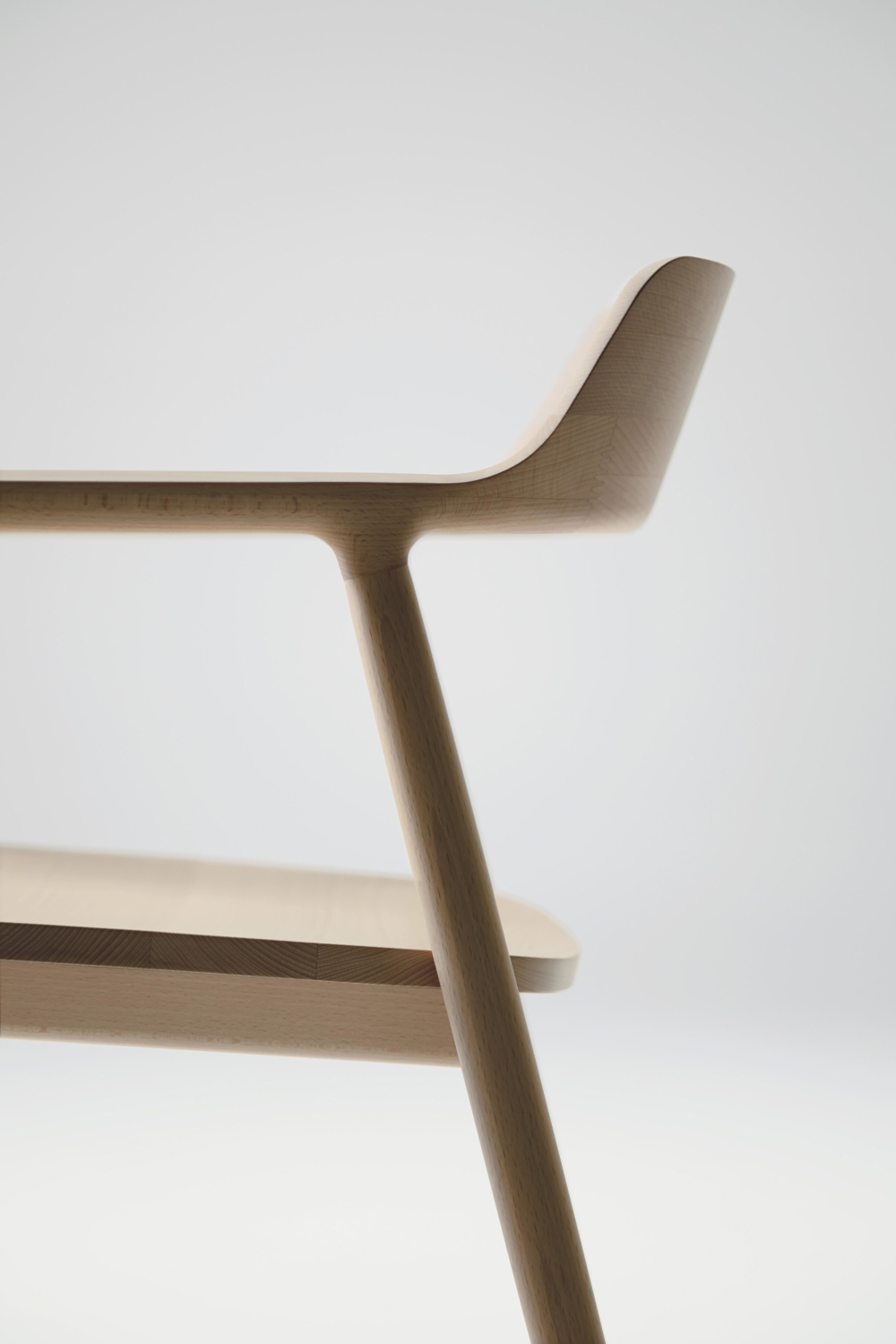
Image: Detail of the HIROSHIMA Armchair by Naoto Fukasawa for Maruni. Quality is often felt in the details people rarely name.